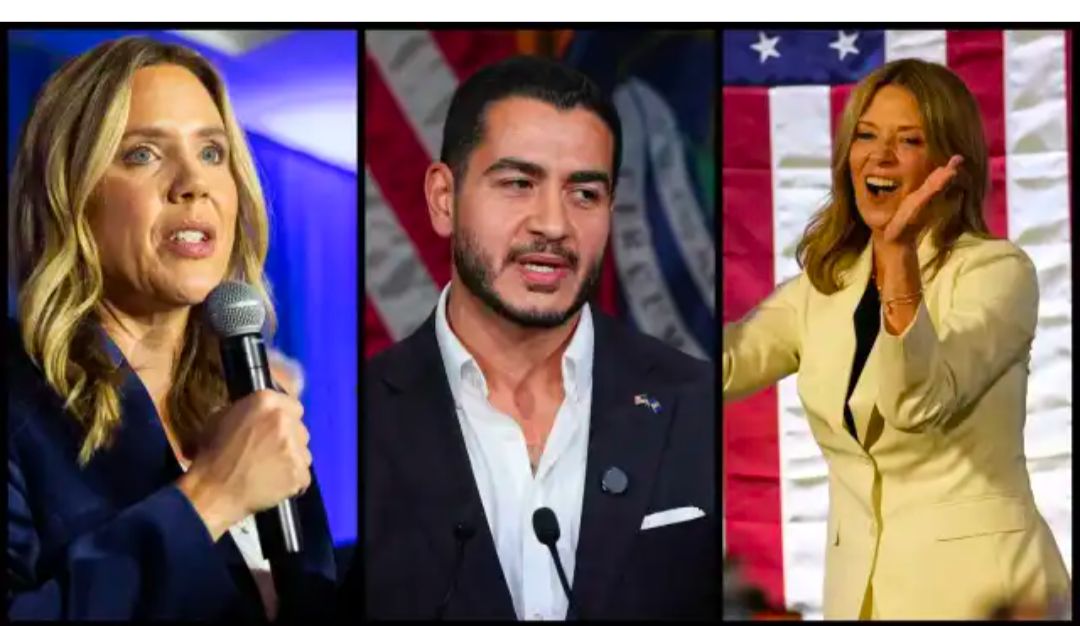
The election of three Democrats with medical backgrounds in the US midterm elections could bring a distinctive perspective to debates over healthcare access, affordability and public health. While two have won seats in the US Senate, a third has been elected governor of Ohio — giving doctors a voice at both the federal and state levels.
Dr Annie Andrews, a paediatrician from South Carolina, and Dr Abdul El-Sayed, a physician-trained epidemiologist from Michigan, have won Senate seats. Dr Amy Acton, a physician and former Ohio health director, has defeated Republican Vivek Ramaswamy to become Ohio’s next governor. Their victories are significant not simply because of their medical backgrounds, but because each brings experience from a different part of the healthcare system.
A practising paediatrician, Andrews made healthcare access and affordability central to her campaign. Her clinical experience could inform discussions on childhood health, vaccination, preventive care, maternal and child health, and the difficulties families face in accessing affordable medical services.
El-Sayed brings a public-health perspective to the Senate. A physician-trained epidemiologist and former director of Detroit’s health department, he has focused on health disparities, healthcare costs and the influence of corporate interests in healthcare. His campaign included support for Medicare for All, a proposal to expand publicly funded health coverage.
Their presence in the Senate could matter as lawmakers debate the future of health insurance, Medicaid, the Affordable Care Act, prescription drug costs and federal funding for medical research. Senators can scrutinise legislation, question administration officials, influence budget decisions and oversee federal health agencies. Their medical and public-health experience could help bring clinical evidence and the realities of patient care into these discussions.
Acton’s victory gives the story a further dimension. As Ohio’s next governor, she will have direct responsibility for state-level healthcare priorities and administration. She previously served as Ohio’s health director during the Covid-19 pandemic, when she became a prominent public face of the state’s public-health response. Her experience could shape decisions on public-health preparedness, Medicaid administration, healthcare access and the state’s response to future health emergencies.
Unlike the two senators, Acton will have executive authority over state agencies and the implementation of policies in Ohio. However, her ability to deliver on campaign promises will depend partly on working with the state legislature, where Republicans retain control.
The three doctors enter public life at a time when the American healthcare and public-health systems are facing significant political and financial pressures. The Trump administration has pursued a series of spending reductions, funding restrictions and institutional changes affecting federal health agencies and programmes. Proposed budget cuts have targeted areas including the Centers for Disease Control and Prevention (CDC), the National Institutes of Health (NIH), the Health Resources and Services Administration and programmes dealing with mental health, HIV/AIDS and emergency preparedness.